







Introduction
Dune: Spice Wars is a real-time strategy game set in the harsh desert world of Arrakis. Inspired by the famous Dune universe, the game combines traditional strategy mechanics with political influence, resource management, and territorial warfare. Instead of focusing only on military power, players must balance economy, diplomacy, espionage, and military strength to control the most valuable resource in the universe: spice.
Arrakis is a dangerous planet filled with rival factions, deadly sandworms, and unpredictable desert storms. To succeed, players must build a strong economy, manage territories efficiently, and adapt their strategy depending on the factions competing for control.
This guide explains how to play Dune: Spice Wars effectively, covering early expansion, resource management, diplomacy, military tactics, and long-term victory strategies.
1. Understanding the Importance of Spice
Spice is the most important resource in Dune: Spice Wars. It fuels the entire economy and must be delivered regularly to the Emperor as tax.
If you fail to pay spice taxes, severe penalties occur, including financial loss and political pressure.
Spice is harvested using spice harvesters placed on spice fields. However, harvesting is dangerous because sandworms are attracted to the vibrations produced by harvesting machines.
Players must constantly monitor harvesters and recall them quickly when a sandworm approaches.
Efficient spice management forms the foundation of a successful strategy.
2. Choosing the Right Faction
Each faction in Dune: Spice Wars has unique strengths and playstyles.
Common factions include:
House Atreides
Focused on diplomacy and stability. Their leadership abilities help maintain strong political influence.
House Harkonnen
Aggressive and militaristic, excelling in domination through force.
The Smugglers
Specialists in underground economy and trade, capable of generating large profits.
The Fremen
Native inhabitants of Arrakis who move efficiently across the desert and survive harsh conditions.
Choosing a faction that matches your strategy preferences greatly improves your chances of success.
3. Expanding Territory Early
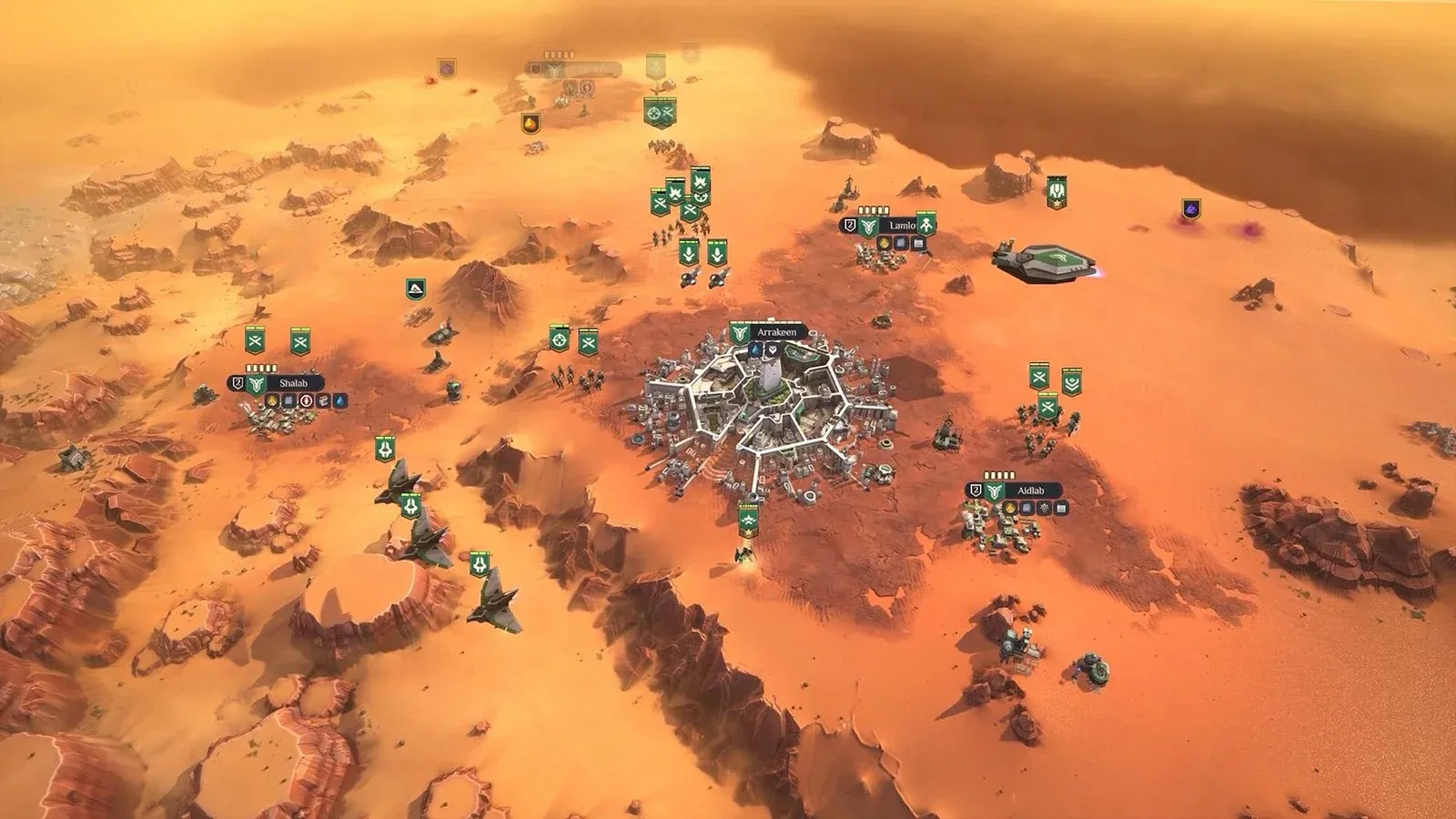
At the start of the game, expanding your territory quickly is extremely important.
Territories contain valuable resources such as:
- Spice fields
- Water sources
- Rare minerals
- Strategic defensive locations
To capture new territory, send military units to nearby villages and defeat local resistance.
Once captured, the village becomes part of your empire and can produce resources or support your economy.
Early expansion provides long-term advantages.
4. Managing Water and Supply
Arrakis is a desert planet where water is extremely scarce.
Water is required for:
- Supporting population growth
- Maintaining military units
- Sustaining economic production
If water supplies become too low, your economy slows down and your units suffer penalties.
Capturing water-rich territories early helps stabilize your economy and prevents future shortages.
Balancing water production with expansion is essential.
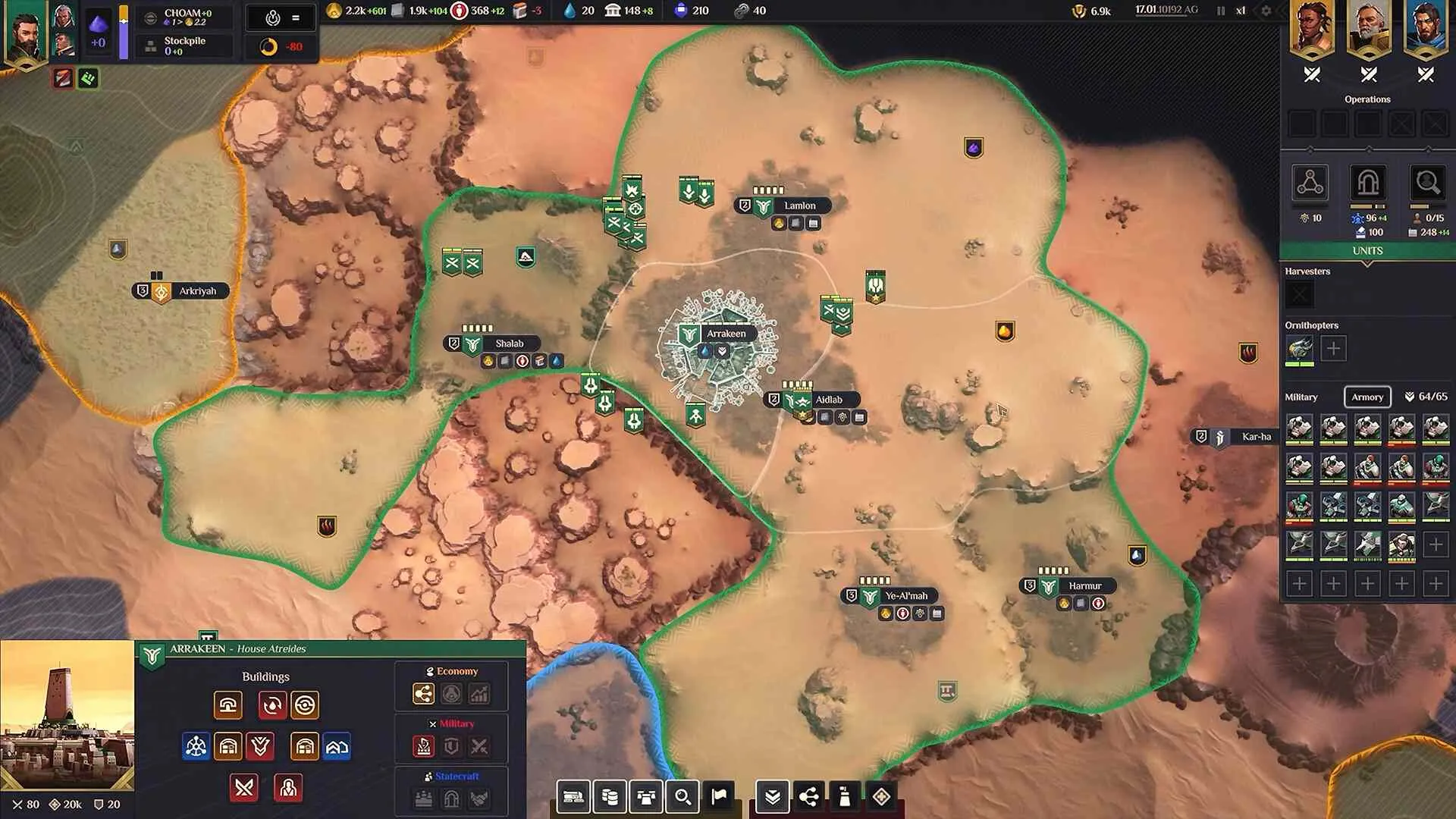
5. Building an Efficient Economy
A strong economy supports both military and political strategies.
Important economic buildings include:
- Spice refineries for harvesting spice
- Wind traps for producing water
- Processing facilities for resource conversion
- Trade buildings that generate income
Different territories allow different building types.
Choosing the right buildings for each region maximizes economic efficiency and avoids wasted resources.
6. Avoiding Sandworms
Sandworms are one of the most dangerous environmental threats on Arrakis.
They are attracted to vibrations caused by vehicles and harvesters.
If a sandworm reaches a harvester before it is recalled, the harvester will be destroyed.
To avoid this:
- Watch the worm warning indicator carefully
- Recall harvesters immediately when warnings appear
- Build additional harvesters to reduce downtime
Managing sandworm threats ensures continuous spice production.
7. Strengthening Your Military
Military power is necessary to defend your territories and attack enemy factions.
Common military unit types include:
- Infantry units for general combat
- Heavy units with stronger armor
- Support units that provide bonuses or healing
Maintaining a balanced army helps handle different combat situations.
However, military expansion should be balanced with economic growth to avoid overspending.
8. Using the Landsraad Political System
Politics plays an important role in Dune: Spice Wars.
The Landsraad Council regularly votes on laws that affect all factions.
Examples of laws include:
- Tax adjustments
- Military restrictions
- Economic bonuses
Players can influence these decisions by spending influence points.
Participating in political votes can weaken rivals or strengthen your own position without direct warfare.

9. Utilizing Espionage and Intelligence
Espionage allows players to gather valuable information and disrupt enemies.
Spy networks can be used to:
- Steal resources
- Sabotage enemy infrastructure
- Gain intelligence about enemy strategies
Building a strong intelligence network provides strategic advantages and helps predict enemy movements.
Espionage is especially powerful when used alongside military operations.
10. Defending Against Desert Storms
Sandstorms frequently sweep across Arrakis.
These storms can damage units, disrupt visibility, and slow movement across the desert.
Smart players use storms strategically by:
- Avoiding combat during severe storms
- Ambushing enemies struggling with storm effects
- Positioning armies safely until the storm passes
Understanding environmental hazards helps protect your forces and maintain stability.
11. Balancing Diplomacy and Warfare
Not every conflict needs to be solved through military force.
Diplomatic agreements can provide:
- Temporary peace with rivals
- Trade opportunities
- Strategic alliances against stronger factions
Sometimes maintaining peace allows you to focus on economic growth or political influence.
Choosing when to fight and when to negotiate is an important strategic decision.
12. Preparing for Endgame Victory
As the game progresses, multiple victory paths become available.
Possible victory types include:
- Military domination
- Political victory through the Landsraad
- Economic dominance
- Control of key territories
Players should focus on the victory condition that best matches their strengths.
For example, economic factions may pursue wealth-based victories, while aggressive factions focus on military conquest.
Planning your victory path early improves your chances of success.
13. Long-Term Strategic Thinking
Dune: Spice Wars rewards long-term planning.
Players must constantly evaluate:
- Resource production levels
- Military strength
- Political influence
- Enemy expansion patterns
A strategy that works early in the game may not remain effective later.
Successful players adapt their strategies as the situation evolves.
Flexibility is one of the most important skills in strategy games.
Conclusion
Dune: Spice Wars offers a complex and rewarding strategy experience that combines economic management, military conflict, political influence, and environmental challenges. Controlling Arrakis requires careful planning, efficient resource use, and the ability to adapt to unpredictable threats such as rival factions and sandworms.
By mastering spice production, expanding territories wisely, balancing diplomacy with military power, and managing environmental hazards, players can build a powerful empire capable of dominating the desert planet.
With patience and strategic thinking, victory on Arrakis becomes achievable even against powerful opponents.
160-Character Summary
A complete Dune: Spice Wars guide covering spice management, faction strategies, territorial expansion, diplomacy, sandworms, and winning strategies.